

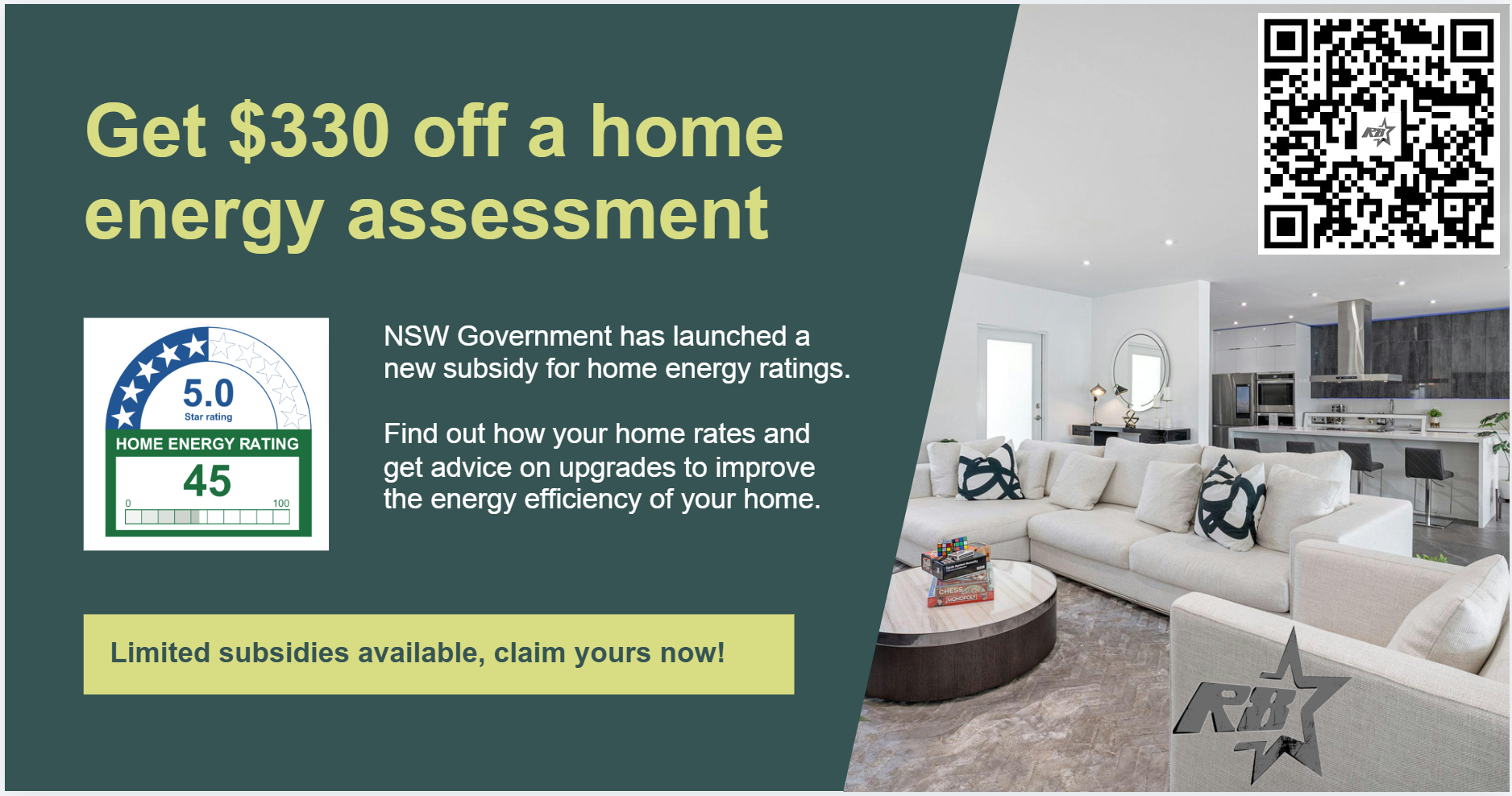
Get $330 off a home energy rating
What Energy Rating is my House?
Do You:
● Live in NSW
● Want a rating for a residential property
● Own their property
● Be willing to complete feedback surveys
The NSW Subsidised Home Energy Ratings program allows NSW households to receive $330 off the cost of a home energy rating.
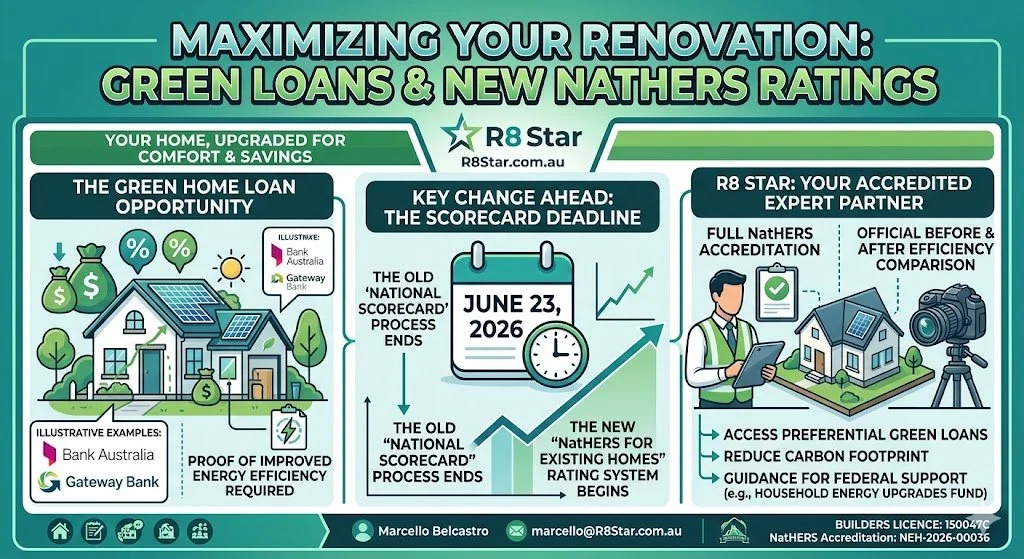
Maximizing Your Renovation: How 'Green Loans' and the New NatHERS Ratings Can Save You Thousands
Are you planning an alteration, extension, or major renovation (alts & adds) for your home? If so, you might be eligible for lower interest rates and government-backed funding—all while creating a more comfortable, sustainable place to live.
At R8 Star, we stay ahead of the curve to ensure our clients get the most out of their home improvements. Here is what you need to know about the changing landscape of home energy efficiency and how it impacts your wallet
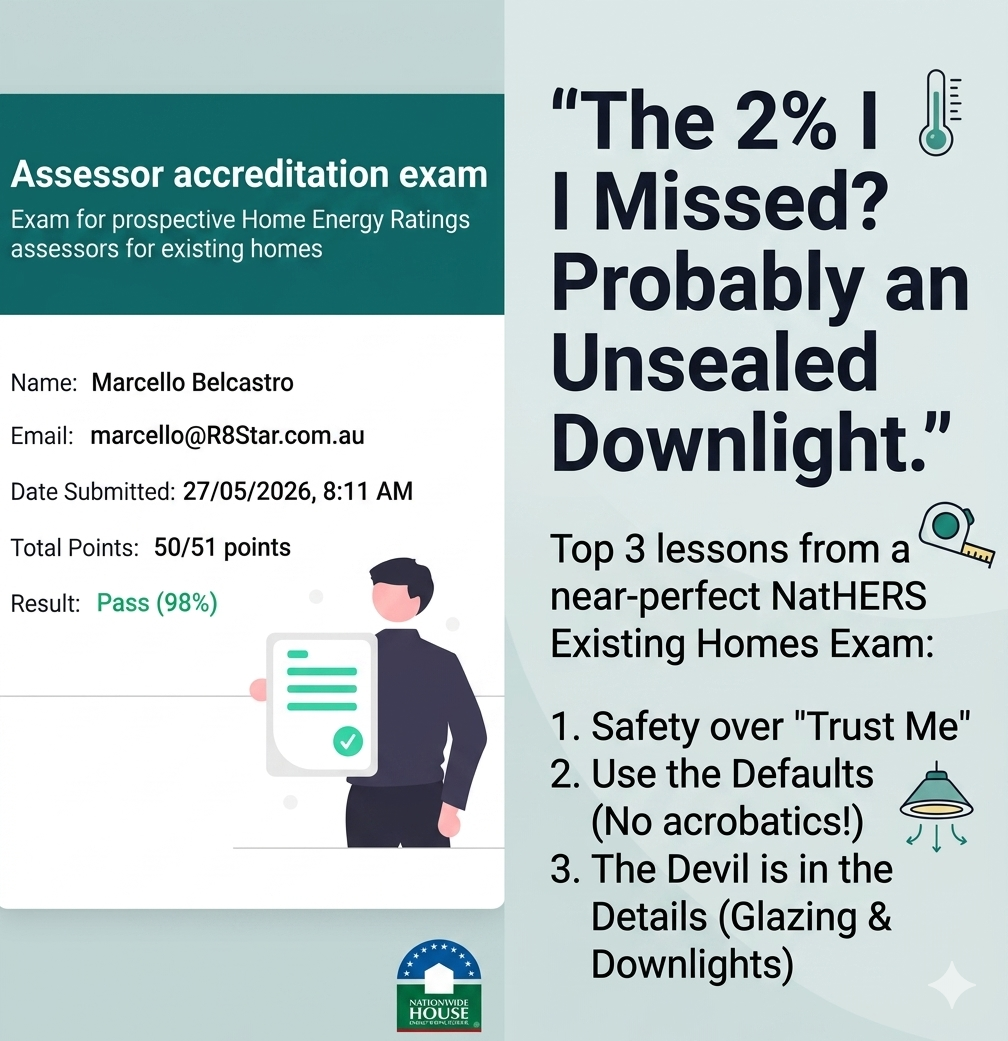
3 Things I Learnt Taking the NatHERS for Existing Homes Exam
Preparing for the NatHERS for Existing Homes Assessor exam is no walk in the park.
Here are the top 3 things I learnt while taking the exam!
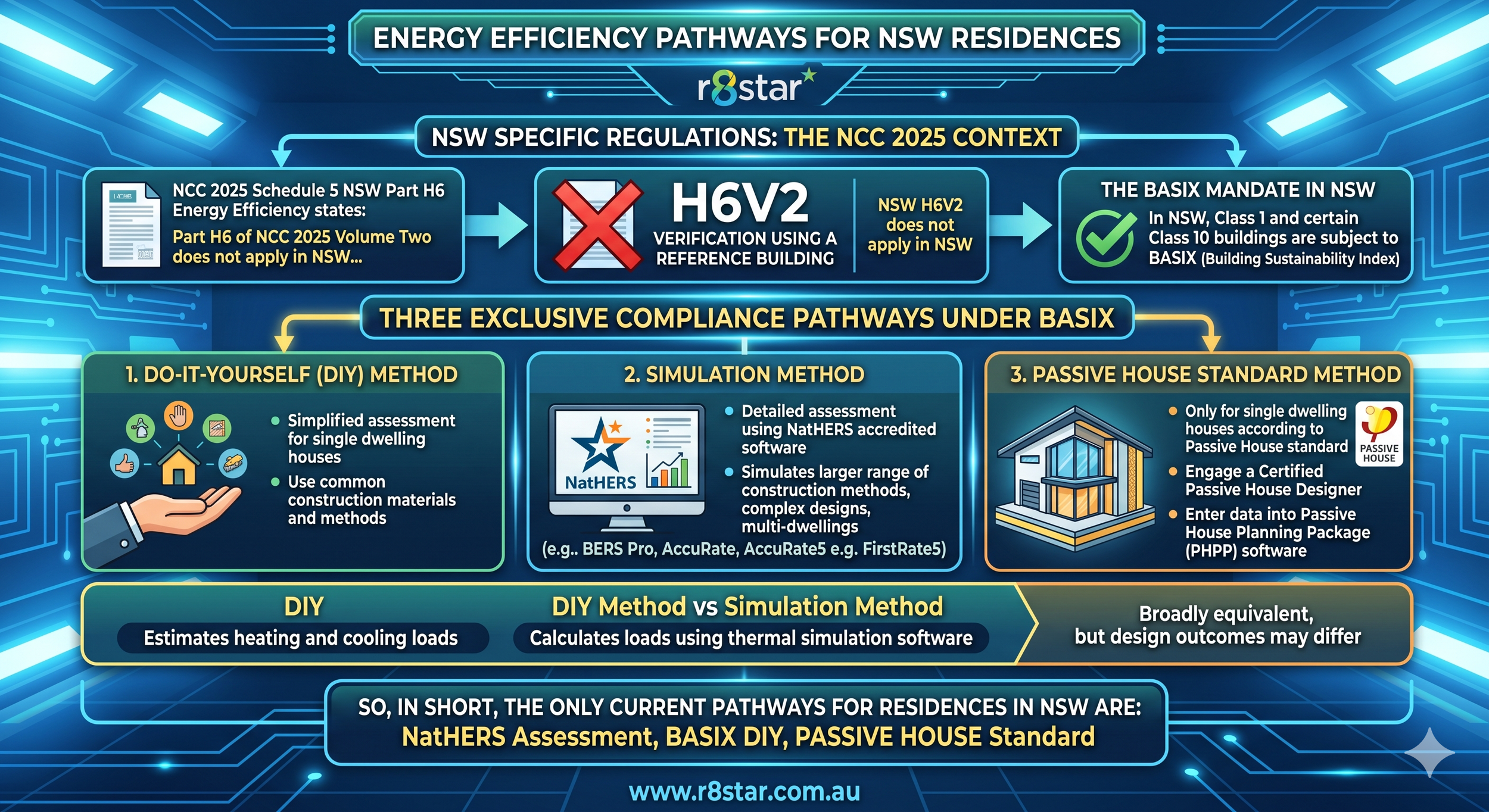
Subsidised Home Energy Ratings for eligible NSW households
The NSW Government is offering subsidised NatHERS Home Energy Rating assessments for NSW households. These are fully accredited NatHERS Home Energy Ratings conducted by accredited assessors.